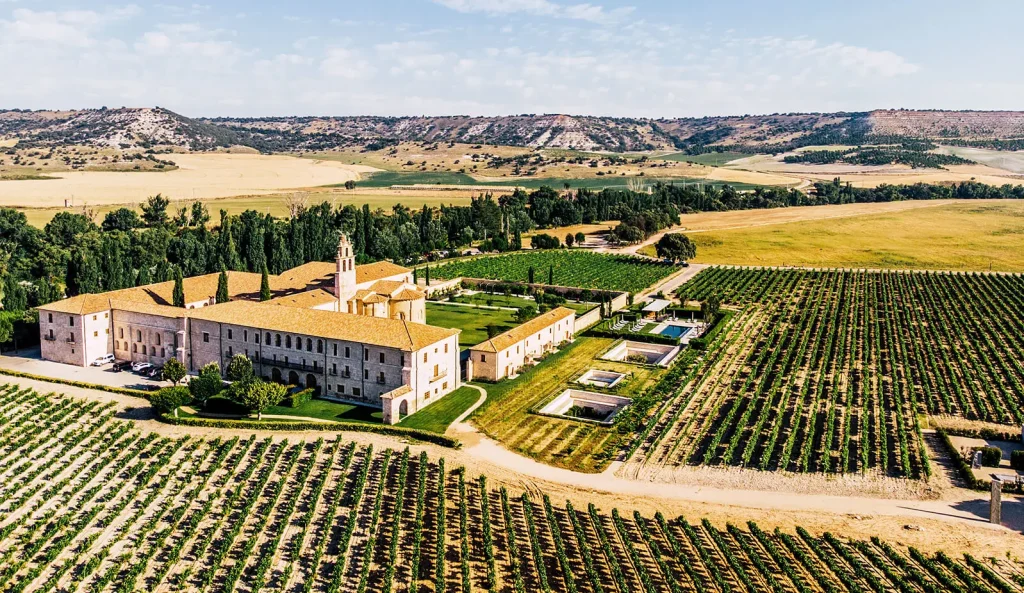
Abadía Retuerta is the guardian of history and a meeting place between land and life. An ecosystem of experiences where each one has a story behind it that deserves to be told, lived and shared.
Guardians of a legacy
Our Mission
A legacy that nature and history has given us and we have to manage it in a responsible and sustainable way to pass it on to future generations in better conditions. What nature gives us, we give it back by providing soul and passion for what we do.
Universe of experiences
Our purpose
A project born from wine, but magnified by the illusion of creating unique and memorable experiences. Everything has a story behind it that deserves to be told.
Benchmarks in wine and hospitality
Our Mission
A universe of experiences around wine, history, art, wellness and gastronomy.
Abadía Retuerta's mantra
We are Timeless
Fusing past and present for the future. Abadía Retuerta was born in the 12th century and is here to stay. Here there is no rush, we want the brand to transcend, to endure over time. Always with respect, dedication and a spirit of self-improvement that helps us to be better every day.
We are Sensibes
At Abadía Retuerta we are able to excite. We put heart and soul into everything we do.
We are True
What we value most is to surprise. To be part of their memories, of those experiences that produce feelings of joy, nostalgia, tranquility… emotions that are priceless.
We are Generous
We are a brand that shares everything it has, its historical legacy, its place, its best grapes. Everything so that the consumer can enjoy it and feel part of it.
Our history
Discover our legacy
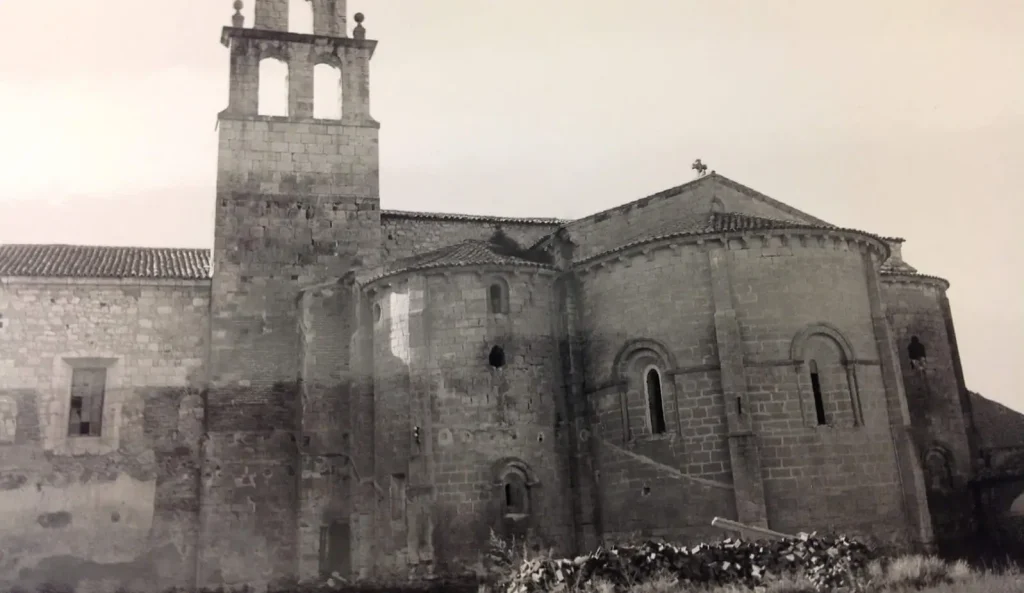
The Abbey of Santa María de Retuerta was founded at the end of the 12th century, on the banks of the Duero River (in the municipality of Sardón de Duero), and has remained as a witness within the boundaries of the Retuerta estate. It is one of the most important Romanesque works in the province of Valladolid. It was founded in 1146 by Sancho Ansúrez, first abbot and descendant of Count Pedro Ansúrez, founder of the town of Valladolid.
It was the Premonstratensian Order, in which Sancho Ansúrez was ordained as a canon, the one in charge of establishing itself in Retuerta, becoming the mother house of the order in Spain.
From its origins, the monastery of Santa María de Retuerta had the support of the monarchy, pontiffs and private individuals, and it is in this monastery where the General Chapters of the order were held. In addition, from the 17th century it became the General Novitiate of the order in Spain.
The various documents found place these lands as a very ancient exploitation and with great roots and tradition in the cultivation of the vine, around the Abbey of Santa Maria de Retuerta. All this reinforces the great tourist potential of the area by combining the cultural interest of the great historic buildings with the attraction of quality wines.
The disentailment of Mendizábal in 1835 would determine the expulsion of the monks from the monastery. It then passed into the hands of the State, who ceded it to different companies and individuals until 1988, when the estate became the property of the Novartis Group, which has successfully resumed its ancestral winemaking activity, now through the Abadía Retuerta Winery, and today Abadia Retuerta Le Domaine.
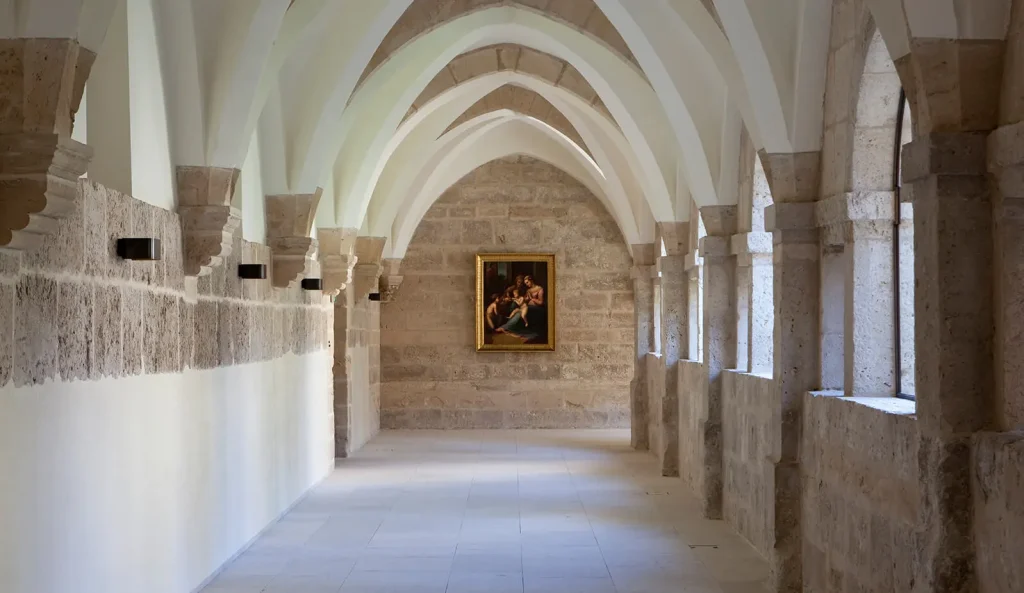
It consists of very different architectural styles: late Romanesque and Gothic with elements of the sixteenth, seventeenth and eighteenth centuries. If the heritage has been saved in many places thanks to ecclesiastical initiatives and the administration, in some cases such as the Monastery of Retuerta, it has been the private business initiative that has managed to enhance the value of the historical heritage, saving this important monument from the destruction suffered by many others.
Its sculptural or pictorial patrimony is scattered, although not lost, since today they can be admired in other locations. The façade shows an extension of the south loggia of the cloister, which is the Hospice. Above the belfry – bell tower is located next to the head of the church. It dates from 1655-1656.
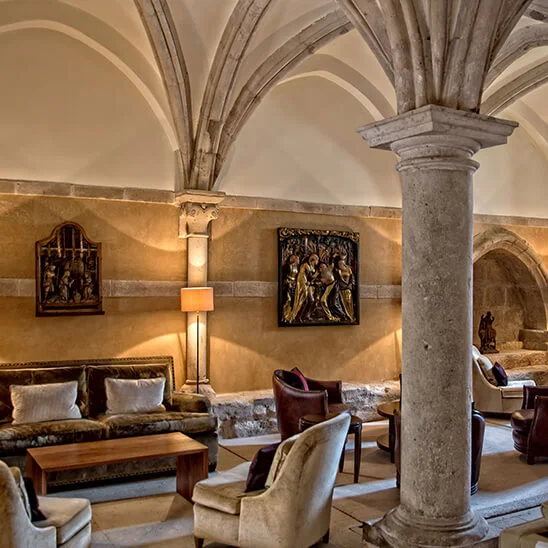
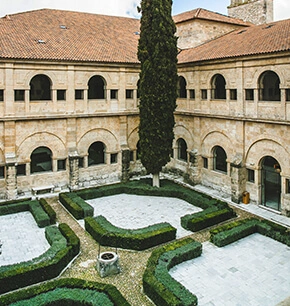
The church, which has the function of an apostolate (belfry), preserves an irregular floor plan. The Romanesque style head of the church stands out from the parts built in later stages, which are located in the northern Gothic style. The cloister, the chapter house and the refectory also deserve individual mention.
The cloister located on the south side of the church articulates the rooms where we find the refectory, located parallel to the cloister wall, and not perpendicular as in the Cistercian monasteries.